Buy xbtc.eu ?
We are moving the project
xbtc.eu .
Are you interested in purchasing the domain
xbtc.eu ?
domain@kv-gmbh.de · 0541-91531010
Buy xbtc.eu ?
What is covalent development?
Covalent development is a term used in the context of software development to describe a collaborative approach to building and maintaining software. It involves multiple developers working together on the same codebase, using version control systems to manage changes and updates. Covalent development emphasizes communication, teamwork, and shared responsibility for the code, leading to a more efficient and cohesive development process. This approach allows for greater flexibility and adaptability in responding to changes and challenges in the development process. **
What are covalent bonds?
Covalent bonds are a type of chemical bond formed between two atoms when they share one or more pairs of electrons. This sharing of electrons allows both atoms to achieve a more stable electron configuration, typically by filling their outermost energy levels. Covalent bonds are typically found in molecules and are responsible for holding the atoms together to form the structure of the molecule. These bonds can be either polar, where the shared electrons are not equally distributed between the atoms, or nonpolar, where the shared electrons are equally distributed. **

Similar search terms for Covalent
Top-Angebote
Products related to Covalent:
-
Chengdu Menghejia Technology Co., Ltd. Tent GoldTent Pegs set includes 20 x Tent Pegs, 1 x Hexagon socket, 1 x Tent peg puller, 1 x Portable carrying case. The camping pegs are 20cm long and 8mm in diameter, with thread details for stronger grip and adaptability to various surfaces Chengdu Menghejia Technology Co., Ltd.92,99 £*Shipping: 0,00 £Secure redirect to the provider
-
Bondbar Bonding Technology Lightener Highlighting Kit eachbondbar Bonding Technology Lightener Highlighting Kit provides the current bondbar Bonding Technology Lightener and 30v Creme Developer, designed to protect and hydrate hair bonds during the lightening process. Compared to traditional lighteners,...22,89 $*Shipping: 0,00 $Secure redirect to the provider



-
What is a covalent bond?
A covalent bond is a type of chemical bond that involves the sharing of electron pairs between atoms. This sharing of electrons allows each atom to achieve a more stable electron configuration, typically by filling their outermost energy level. Covalent bonds are typically found in molecules and are stronger than other types of chemical bonds, such as ionic bonds. The number of shared electrons can vary, leading to different types of covalent bonds, such as single, double, or triple bonds. **
-
What is a nonpolar covalent bond?
A nonpolar covalent bond is a type of chemical bond where two atoms share electrons equally. This occurs when the difference in electronegativity between the two atoms is very small or nonexistent. As a result, there is no separation of charge within the bond, making it nonpolar. Nonpolar covalent bonds are typically found between atoms of the same element or between atoms with similar electronegativities. **
-
What does "covalent" mean in chemistry?
In chemistry, "covalent" refers to a type of chemical bond that involves the sharing of electron pairs between atoms. This type of bond is formed between nonmetal atoms and is characterized by the atoms sharing electrons in order to achieve a stable electron configuration. Covalent bonds are typically strong and result in the formation of molecules. **
-
Is covalent bonding a difficult topic?
Covalent bonding can be a challenging topic for some students due to its abstract nature and the need to understand concepts such as electron sharing and molecular geometry. However, with proper explanation and practice, students can grasp the fundamentals of covalent bonding. It is important to break down the concepts into simpler parts and provide real-world examples to help students understand the concept better. With patience and practice, students can overcome the difficulties associated with covalent bonding. **


What is a non-covalent bond?
A non-covalent bond is a type of chemical bond that does not involve the sharing of electrons between atoms. Instead, non-covalent bonds are formed through electrostatic interactions, such as hydrogen bonding, van der Waals forces, and ion-dipole interactions. These bonds are generally weaker than covalent bonds and can be easily broken under certain conditions. **
Can you explain the covalent bond?
A covalent bond is a type of chemical bond that involves the sharing of electron pairs between atoms. This sharing of electrons allows each atom to achieve a full outer electron shell, making the atoms more stable. Covalent bonds are typically formed between nonmetal atoms, and the strength of the bond is determined by the number of shared electrons and the distance between the nuclei of the atoms. Covalent bonds can be either polar or nonpolar, depending on the electronegativity difference between the atoms involved. **
Top-Angebote
Products related to Covalent:
-
Youfap Market DIY Digital Cyber Hourglass Birthday Gift, Interactive LED Hourglass For Kids, Cyber Style With Glowing Technology square YellowTransform the ordinary into something extraordinary with the DIY Digital Cyber Hourglass! This innovative toy brings a futuristic glow to any room, making it the perfect birthday gift for kids who love unique, techinspired gadgets. With its striking...59,97 $*Shipping: 0,00 $Secure redirect to the provider
-
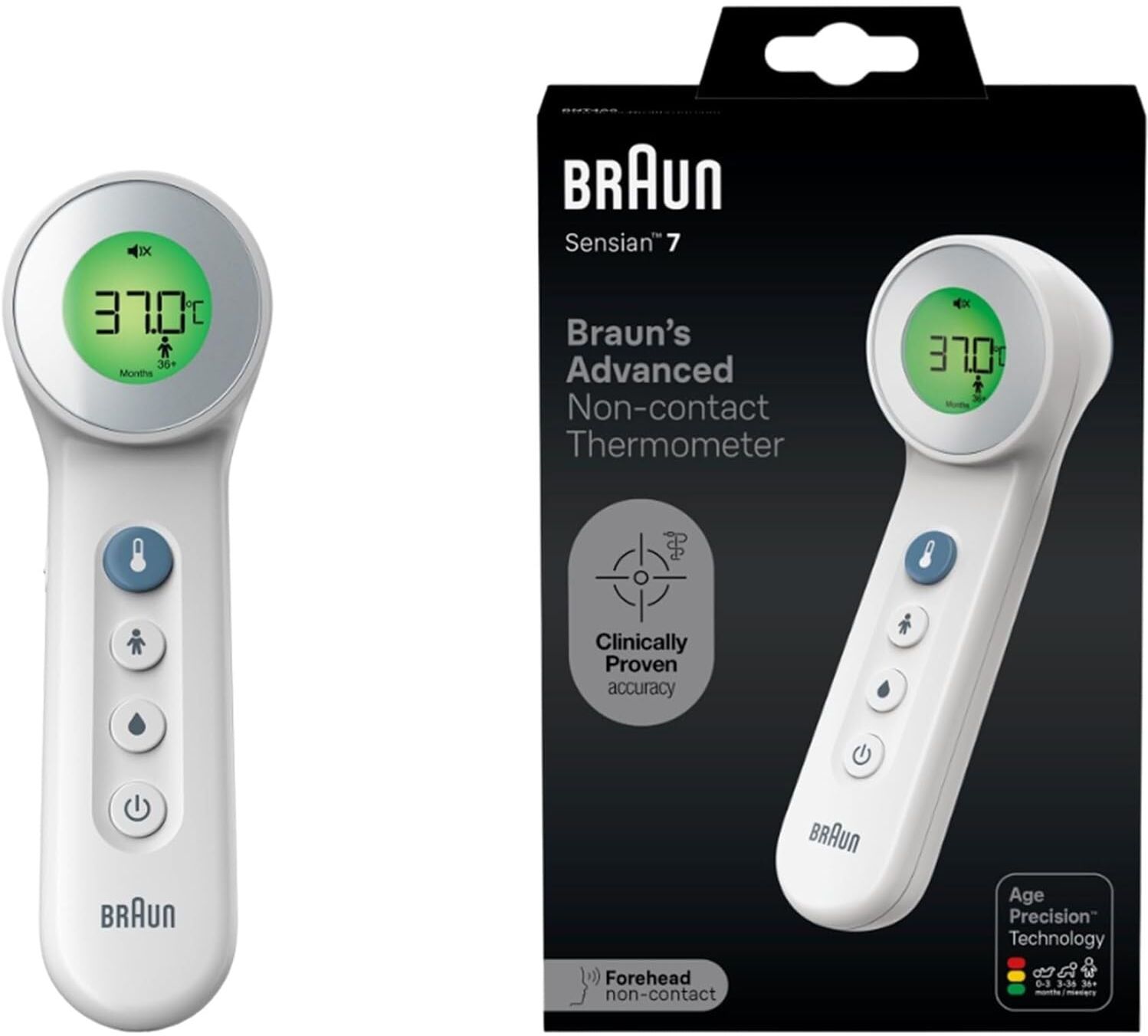
Braun Sensian 7 Forehead non-contact thermometer - Age Precision Technology - 3-in-1 Colour-Coded Digital Display - Baby and Child Friendly - BNT400B, New✅ Braun Sensian 7 Forehead Thermometer – BNT400B Model: BNT400B Type: Non-Contact Forehead Thermometer Technology: Age Precision™ Use: Baby, Child & Adult Take the stress out of temperature checks with the Braun Sensian 7 BNT400B Forehead Thermometer – the smart, gentle, and hygienic way to monitor your family’s health. ✅ No-Touch & Touch Mode Designed for maximum convenience, this thermometer offers dual measurement modes : No-touch mode : Read temperature without disturbing your child (ideal for sleeping babies). Touch mode : Simply place it gently on the forehead for a quick reading. ✅ Age Precision™ Technology Not all fevers are the same across age groups. With Braun’s unique Age Precision™ setting, you can select the age of the person (0-3 months, 3-36 months, or 36+ months), and the thermometer will interpret the reading accordingly to give a more accurate guidance. ✅ Colour-Coded Fever Guidance Quickly understand the result with a colour-coded digital display : ✅ Green – Normal temperature ⚠️ Yellow – Elevated temperature ❗ Red – High fever Perfect for giving you instant peace of mind when you need it most. ✅ 3-in-1 Functionality A truly versatile health device: Forehead temperature reading Object temperature – Check baby’s bottle, food, or bathwater Room temperature – Ensure the nursery is just right ✅ Silent Mode for Night-Time Checks Use the silent mode and backlit display to take readings in the dark without waking your child – ideal for late-night checks. ✅ Fast & Accurate Readings Delivers a precise result in just 2 seconds , powered by Braun’s trusted German-engineered sensor technology for clinical accuracy. ✅ Hygienic & Safe No probe covers needed Non-invasive and gentle – Ideal for babies and toddlers Easy to clean and use daily ✅ Ideal For: Parents with babies, toddlers, and young children Home use for all family members Safe, quick temperature checks without stress or discomfort Make health checks easier, faster, and more accurate with the Braun Sensian 7 BNT400B – your trusted partner in family wellness.37,49 £*Shipping: 0,00 £Secure redirect to the provider
-
Chengdu Menghejia Technology Co., Ltd. Tent GoldTent Pegs set includes 20 x Tent Pegs, 1 x Hexagon socket, 1 x Tent peg puller, 1 x Portable carrying case. The camping pegs are 20cm long and 8mm in diameter, with thread details for stronger grip and adaptability to various surfaces Chengdu Menghejia Technology Co., Ltd.92,99 £*Shipping: 0,00 £Secure redirect to the provider
-
What is covalent development?
Covalent development is a term used in the context of software development to describe a collaborative approach to building and maintaining software. It involves multiple developers working together on the same codebase, using version control systems to manage changes and updates. Covalent development emphasizes communication, teamwork, and shared responsibility for the code, leading to a more efficient and cohesive development process. This approach allows for greater flexibility and adaptability in responding to changes and challenges in the development process. **
-
What are covalent bonds?
Covalent bonds are a type of chemical bond formed between two atoms when they share one or more pairs of electrons. This sharing of electrons allows both atoms to achieve a more stable electron configuration, typically by filling their outermost energy levels. Covalent bonds are typically found in molecules and are responsible for holding the atoms together to form the structure of the molecule. These bonds can be either polar, where the shared electrons are not equally distributed between the atoms, or nonpolar, where the shared electrons are equally distributed. **
-
What is a covalent bond?
A covalent bond is a type of chemical bond that involves the sharing of electron pairs between atoms. This sharing of electrons allows each atom to achieve a more stable electron configuration, typically by filling their outermost energy level. Covalent bonds are typically found in molecules and are stronger than other types of chemical bonds, such as ionic bonds. The number of shared electrons can vary, leading to different types of covalent bonds, such as single, double, or triple bonds. **
-
What is a nonpolar covalent bond?
A nonpolar covalent bond is a type of chemical bond where two atoms share electrons equally. This occurs when the difference in electronegativity between the two atoms is very small or nonexistent. As a result, there is no separation of charge within the bond, making it nonpolar. Nonpolar covalent bonds are typically found between atoms of the same element or between atoms with similar electronegativities. **
Similar search terms for Covalent
-
Bondbar Bonding Technology Lightener Highlighting Kit eachbondbar Bonding Technology Lightener Highlighting Kit provides the current bondbar Bonding Technology Lightener and 30v Creme Developer, designed to protect and hydrate hair bonds during the lightening process. Compared to traditional lighteners,...22,89 $*Shipping: 0,00 $Secure redirect to the provider
-
Youfap Market DIY Digital Cyber Hourglass Birthday Gift, Interactive LED Hourglass For Kids, Cyber Style With Glowing Technology square RedTransform the ordinary into something extraordinary with the DIY Digital Cyber Hourglass! This innovative toy brings a futuristic glow to any room, making it the perfect birthday gift for kids who love unique, techinspired gadgets. With its striking...59,97 $*Shipping: 0,00 $Secure redirect to the provider
-
What does "covalent" mean in chemistry?
In chemistry, "covalent" refers to a type of chemical bond that involves the sharing of electron pairs between atoms. This type of bond is formed between nonmetal atoms and is characterized by the atoms sharing electrons in order to achieve a stable electron configuration. Covalent bonds are typically strong and result in the formation of molecules. **
-
Is covalent bonding a difficult topic?
Covalent bonding can be a challenging topic for some students due to its abstract nature and the need to understand concepts such as electron sharing and molecular geometry. However, with proper explanation and practice, students can grasp the fundamentals of covalent bonding. It is important to break down the concepts into simpler parts and provide real-world examples to help students understand the concept better. With patience and practice, students can overcome the difficulties associated with covalent bonding. **
-
What is a non-covalent bond?
A non-covalent bond is a type of chemical bond that does not involve the sharing of electrons between atoms. Instead, non-covalent bonds are formed through electrostatic interactions, such as hydrogen bonding, van der Waals forces, and ion-dipole interactions. These bonds are generally weaker than covalent bonds and can be easily broken under certain conditions. **
-
Can you explain the covalent bond?
A covalent bond is a type of chemical bond that involves the sharing of electron pairs between atoms. This sharing of electrons allows each atom to achieve a full outer electron shell, making the atoms more stable. Covalent bonds are typically formed between nonmetal atoms, and the strength of the bond is determined by the number of shared electrons and the distance between the nuclei of the atoms. Covalent bonds can be either polar or nonpolar, depending on the electronegativity difference between the atoms involved. **
* All prices are inclusive of VAT and, if applicable, plus shipping costs. The offer information is based on the details provided by the respective shop and is updated through automated processes. Real-time updates do not occur, so deviations can occur in individual cases. ** Note: Parts of this content were created by AI.